An entryway console has to perform two jobs at once. It should create a welcoming first impression, but it also needs to receive keys, mail and bags without looking disordered by the end of the day. The most reliable solution is to divide the surface into zones rather than treating every inch as display space.
This console table decor with lamp formula starts with one appropriately scaled light, adds art or a mirror as a visual anchor, and limits decorative objects to a compact group. A clearly protected drop zone completes the arrangement. The result feels composed in photographs yet remains practical when people are actually arriving and leaving.

Measure the Console and Protect the Walking Route
Begin with the room, not the accessories. Close and open the front door, closet door and any nearby cabinet while watching where feet, bags and elbows naturally travel. The console should not interfere with a door swing or force someone to turn sideways. In a narrow hall, mark the proposed furniture depth on the floor with removable tape and live with that outline for a day before committing.
Keep the route beside the console continuous and free from baskets, lamp cords and projecting decor. Accessibility requirements depend on the building and situation, so a decorating guide cannot establish compliance. However, the clear-floor and turning-space principles explained by the U.S. Access Board offer a useful reminder that furniture should not consume space needed for approach or movement. U.S. Access Board
Next, measure the usable tabletop after accounting for molding, outlets and switches. Reserve roughly one-third of that surface as an active drop zone. If the console is very narrow, use a wall-mounted key hook and a shallow tray rather than balancing several organizers on top.
Run a Real Arrival Test
Walk through the door carrying a bag, keys and mail. You should be able to set items down without reaching across the lamp or shifting decor. If the tray disappears behind accessories, or a tote catches a knob, revise the arrangement before styling further.
| Room check | What to test | Practical response |
|---|---|---|
| Door movement | Full door and closet swing | Move the console beyond the swing arc |
| Walking route | Normal passage with bags | Remove floor baskets and projecting objects |
| Drop zone | Keys, mail and one daily bag | Reserve a tray and open surface |
Choose a Lamp That Fits the Table
A console lamp should be substantial enough to anchor one end of the table without dominating the wall. As a starting check, look for a shade whose widest point occupies about one-quarter to one-third of the console's length. This is a visual guideline, not a fixed product rule; a delicate open base may tolerate more width than a dense, dark base.
Judge the total composition at standing eye level. The lamp should connect visually with the art or mirror, while its shade stays comfortably clear of the frame and any wall shelf. A tiny lamp can make the arrangement look scattered, whereas an oversized shade may crowd the drop zone or be vulnerable to bags. Table Lamp Decor Ideas: A Practical Room-by-Room Guide offers additional room-by-room context for matching lamp presence to surrounding furniture.
Check the base as carefully as the height. It should sit fully on the tabletop with room behind it for the cord to bend gently toward the outlet. Avoid placing a heavy lamp on an unstable, folding or visibly bowed console. Felt pads may protect the finish, but they do not correct a table that rocks.
Test the Lamp Before Removing Tags
Set the lamp in place, photograph the console from the doorway, and view it with the lamp both on and off. If your eye sees only the shade, try a narrower profile. If the lamp disappears beside the wall art, test a taller base, a fuller shade or a more contrasting material. For a sculptural alternative, 10 Unique Table Lamps to Elevate Every Room's Style can help you compare distinctive forms without losing sight of usable surface area.

Use Art or a Mirror as the Visual Anchor
Place one wall piece behind the console to connect the lamp with the architecture. A framed print can introduce color without reflecting entryway clutter, while a mirror provides a useful final check before leaving. Choose according to function and sightlines rather than assuming every foyer needs a mirror.
The wall piece should relate more closely to the console than to the ceiling. Before making holes, cut a paper template and tape it to the wall. From the doorway, confirm that the gap above the table feels intentional and that the lamp overlaps or approaches one side of the frame. A wide blank strip between tabletop, lamp and artwork makes the elements feel detached.
Let the lamp and frame differ in height so the eye moves across the arrangement. A rounded ceramic base can soften a console dominated by rectangular shapes; Ceramic Table Lamp Trends 2026: Artful Lighting Revival provides more context on using ceramic lamps as artful focal points. Keep the opposite side lower so it does not compete with the primary vertical element.
Check What the Mirror Reflects
Stand where a guest first enters and inspect the reflection. If it captures an open bathroom, a tangled coat rack or direct bulb glare, shift the mirror or choose art instead. Secure any heavy frame with hardware appropriate for its weight and the wall construction; when uncertain, follow the hardware manufacturer's instructions or consult a qualified installer.

Build One Compact Decorative Object Group
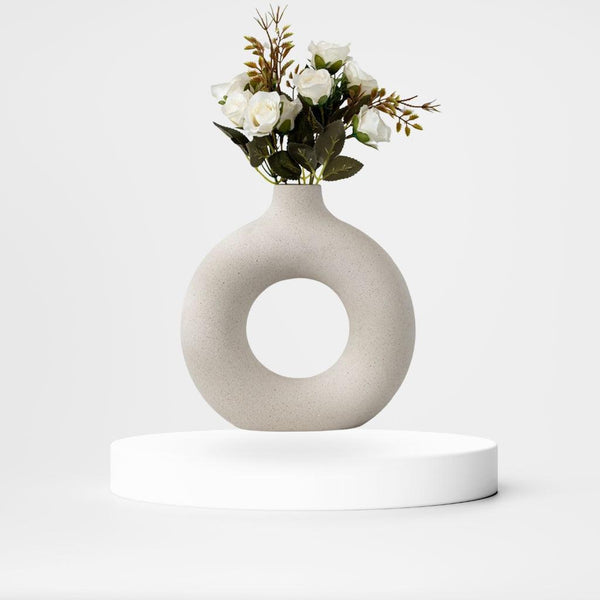
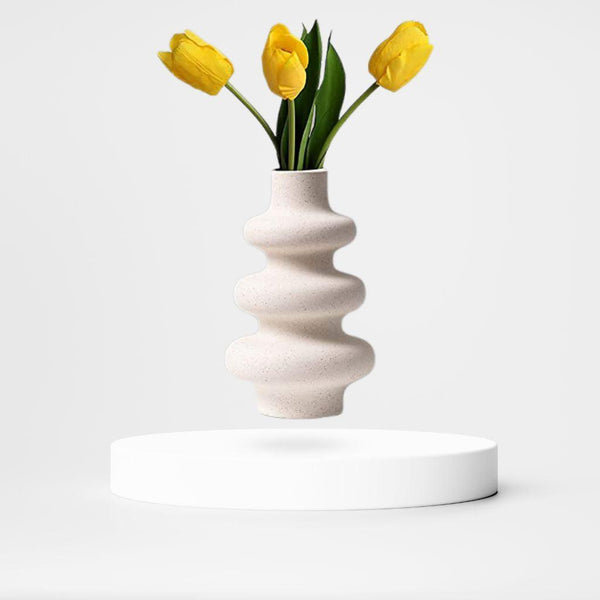
After positioning the lamp and wall anchor, add one compact group rather than distributing small objects across the console. Three pieces with different heights often work well: for example, a lidded box, a short sculptural object and a narrow vase with restrained foliage. The grouping should read as one shape from the doorway and remain easy to move for cleaning.
Repeat one material or color already present in the lamp, frame or adjacent room. A matte ceramic lamp might connect with a small stoneware vessel, while a brass frame can be echoed by one metal detail. Repetition makes the setup cohesive without requiring a matching set. If you prefer a rounded, low-slung focal light, review Mushroom Lamp Decor: A Room-by-Room Styling Guide before deciding whether a mushroom silhouette leaves enough room for arrivals.
Keep fragile, sharp or top-heavy pieces away from the table's leading edge. Entryways experience coats, backpacks and hurried movement, so this is not the ideal place for valuable objects that tip easily. Choose stable pieces and leave visible breathing room between the decorative group and the working tray.
Edit From the Doorway
Step back to the threshold and squint slightly. You should see a tall lamp, a central wall anchor, a lower object group and a patch of genuinely open surface. If every item forms the same height or the tabletop reads as a continuous row, remove one piece before buying another.

Set Comfortable Light for Arrivals
The console lamp is usually accent or orientation lighting, not the entry's only source of illumination. Choose brightness according to the shade, wall color and other fixtures, then test it after dark. An opaque shade directs more light up and down, while a translucent shade creates a broader glow and may reveal the bulb more clearly.
Warm-white light commonly feels comfortable with wood, woven fibers and warm paint, but the best choice is the one that renders your actual finishes well. The U.S. Department of Energy explains that correlated color temperature describes the apparent color of white light, while color-rendering measures address how faithfully colors appear. U.S. Department of Energy Check the bulb's specifications instead of relying on packaging words such as cozy or natural.
Use a bulb type and wattage permitted by the lamp's label, and never exceed the fixture's stated maximum. A high color-rendering LED can help artwork and materials look more consistent while using less electricity than older incandescent technology. For broader lighting plans, How Many Lamps Does a Living Room Need? explains how multiple lamps can share the work rather than forcing one accent lamp to do everything.
Control Glare and Switching
Sit or stand at nearby sightlines and check whether the bare bulb is visible beneath the shade. Adjust the shade height or choose a more suitable diffuser if glare is uncomfortable. Put the switch where it can be reached without leaning over fragile decor, and use dimmers or smart controls only when the lamp, bulb and control are mutually compatible.

Protect the Drop Zone Every Day
Give daily objects an unmistakable destination. Use one tray for keys and sunglasses, a lidded box for visually noisy essentials, and a sorter only if mail genuinely accumulates there. The tray should remain partly empty; a container filled to its edges becomes storage overflow rather than a usable landing place.
Separate the drop zone from the lamp by enough space that keys cannot strike the base and paper cannot collect against the bulb or shade. Route the cord behind the console and secure excess length with an appropriate cable-management product. Do not run a loose cord across a doorway or under a rug, and replace damaged plugs, cords or sockets rather than concealing them.
Where no outlet is conveniently located, a cordless fixture may prevent a trip hazard, but it introduces charging and battery considerations. Compare runtime, charging instructions, stability and intended indoor use before choosing one; Best Battery Operated Table Lamps: Top Picks & Buying Guide outlines practical buying checks. Follow the product's charging guidance, and do not assume every decorative cordless lamp is suitable for continuous operation.
Reset the Surface in Two Minutes
At the end of the day, recycle unwanted mail, return items that belong elsewhere and place keys in the tray. Once a week, lift the small object group as a unit, dust beneath it and confirm that the lamp and cord remain stable. A setup that takes longer than two minutes to restore probably contains too many categories.
Common mistakes
Using a Lamp That Is Too Small
A miniature lamp surrounded by several accessories creates visual noise without anchoring the console. Test one larger lamp first, then add fewer objects. Preserve the drop zone when increasing scale; the answer is not a shade that overhangs a narrow table.
Filling Every Inch of the Surface
An entry console stops functioning when decor occupies the place intended for keys and mail. Remove duplicate vessels, stacked books that serve no purpose and trays for rarely used items. Empty space is a working component of the formula.
Ignoring Cords and Door Swings
A polished arrangement is not successful if a door hits the shade or a cable crosses the walking route. Test all moving doors, route cords behind the furniture and keep plugs accessible. Do not pinch a cord between the console and wall.
Choosing Decor Before Testing the Light
Colors that coordinate in daylight can look dull or distorted under an unsuitable bulb. Test the intended bulb at night with the artwork and wall finish in place, then adjust color temperature, brightness or shade diffusion within the fixture's specifications.
Frequently asked questions
Should a lamp be centered on a console table?
Usually not. Placing the lamp toward one end creates an asymmetrical composition and leaves a practical landing zone on the other. Centering can work beneath a centered mirror when the table is used mainly for display, but it often reduces usable space.
How tall should an entryway console lamp be?
There is no universal height because console, ceiling and artwork dimensions vary. Choose a lamp that appears substantial at standing eye level, relates to the wall piece and keeps the shade clear of frames, shelves and passing bags. A paper or cardboard silhouette helps you test proportions before purchasing.
Can I use two lamps on an entryway console?
Yes, particularly on a long console in a wide foyer, but symmetry uses more surface area and may eliminate the drop zone. Confirm that both lamps can be powered without exposed cords and that the central area still accommodates the entry's daily functions.
What belongs in the small object group?
Use two or three stable objects that vary in height and repeat materials from the lamp or frame. A lidded box, compact sculpture and narrow vessel are practical options. Avoid fragile collections, loose candles and anything that crowds the lamp or catches clothing.
How often should console table decor be restyled?
Restyle only when the room, season or household routine changes. A weekly reset and occasional foliage replacement are usually sufficient. If clutter repeatedly returns, revise the storage categories or enlarge the landing tray instead of changing the decorative objects.
Conclusion
The dependable formula is simple: establish safe circulation, anchor one end with a properly scaled lamp, connect it to art or a mirror, add one low object group and reserve the remaining surface for real life. The exact measurements can vary, but every element should earn its footprint.
Photograph the finished console from the doorway, test the light after dark and complete one normal arrival with your hands full. If the arrangement still looks balanced and accepts keys, mail and a bag without negotiation, the entryway is ready to work.