A sculptural table lamp has two distinct jobs. In daylight, it acts like a small piece of architecture: its outline, material, and proportions contribute to the room even when the switch is off. At night, that same object must control glare, illuminate a useful area, and support the atmosphere you want. A memorable silhouette cannot compensate for uncomfortable light, just as an excellent reading lamp may still feel visually awkward on the furniture beneath it.
The most reliable way to choose sculptural table lamp decor is therefore to evaluate form and illumination separately before judging the lamp as a whole. Photograph the unlit lamp from the doorway, then test it after sunset from the seat or bed where you will actually use it. This style guide explains what to inspect during both tests, including scale, shade construction, bulb visibility, material, placement, and safety.

Separate Daylight Form From Nighttime Light
Begin with the lamp switched off. View it from the doorway, the main seat, and any adjacent circulation path. Look for an outline that remains legible against the wall rather than dissolving into nearby frames, plants, or shelving. A curved ceramic base may soften a room dominated by rectangles, while a narrow metal stem can give visual relief to a heavy cabinet. For broader placement principles, Table Lamp Decor Ideas: A Practical Room-by-Room Guide explains how a lamp's role changes from room to room.
Repeat the review after dark with other lights set as they would be on an ordinary evening. Check whether the lamp creates a useful pool on the tabletop, adds ambient light to the wall or ceiling, and exposes a bright bulb from seated or reclining positions. Do not let a dramatic promotional photograph substitute for this test; camera exposure can make a dim decorative lamp appear more useful than it is.
Use a Two-Pass Home Test
For the daylight pass, take a phone photograph from across the room and convert it to grayscale; this makes proportion and silhouette easier to judge without being distracted by color. For the nighttime pass, place a book, remote, or glass where the lamp must provide light. If you cannot see the object comfortably without looking into glare, the lighting job remains unresolved.
Read the Silhouette Like Furniture
Sculptural lighting is not new, although current forms often feel contemporary. Twentieth-century designers used plastics, metals, glass, and new manufacturing methods to rethink the lamp as an expressive object rather than a decorated stand. The Museum of Modern Art's overview of lighting from the 1960s and 1970s provides useful historical context for that experimentation. The Museum of Modern Art The lesson for a present-day room is simple: material and construction should serve a coherent form, not merely novelty.
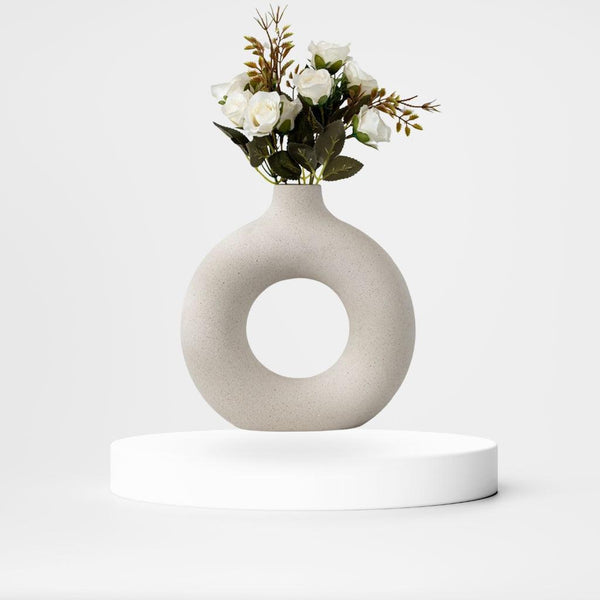
Assess the negative space around the lamp as carefully as the lamp itself. An open-loop base needs a relatively quiet background so its void remains visible. A wide mushroom form needs clear tabletop width. A jagged or branching profile should not overlap artwork, window muntins, or a patterned curtain from the room's main viewpoint. If you are comparing more expressive options, 10 Unique Table Lamps to Elevate Every Room's Style offers additional examples of distinctive table-lamp forms.
Match Visual Weight, Not Just Height
A pale, hollow lamp can be physically large yet visually light; a compact black stone base may carry much more weight. Balance that perceived mass with the furniture below it. On a delicate side table, leave visible surface around the base. On a deep chest, choose enough width or contrast to prevent the lamp from looking stranded.

| Room condition | Helpful lamp silhouette | Check before buying |
|---|---|---|
| Many rectangular furnishings | Rounded, arched, or organic | Curve remains visible from the doorway |
| Patterned or busy background | Simple, solid outline | Edges do not merge with wall decor |
| Small table with open legs | Compact or visually light | Base sits fully on the surface |
| Long, low cabinet | Broad or vertically assertive | Lamp does not look isolated at one end |
Judge the Shade and Bulb Visibility
The shade determines whether an artistic base becomes a comfortable working light. From the chair or bed, the lower edge should conceal the bulb while allowing light to reach the intended surface. Stand as well: a shade that works when seated may reveal the bulb to someone crossing the room. Translucent paper, fabric, or glass can add ambient glow, whereas an opaque metal shade directs more light through its openings.
Shape also affects the lamp's daytime identity. A sharply tapered shade can make an irregular base feel composed; a globe may reinforce a rounded base or create deliberate contrast with an angular one. Review Best Lamp Shades for Table Lamps: Styles, Sizes & Tips when comparing shade styles and dimensions, but treat conventional sizing formulas as starting points. Sculptural bases often require a mock-up because their widest point may sit above or beside the center.
Make a Paper Shade Mock-Up
Before ordering a replacement shade, tape paper into the proposed height and diameter and set it over the unlit lamp without touching the socket. View the mock-up from several angles. This quick check reveals whether the shade crowds the base, hides its most interesting feature, or extends dangerously close to a wall or curtain.

Choose Scale for the Actual Viewpoint
Measure the complete lamp, including the shade, against both the supporting surface and the nearby seating. Beside a sofa, sit normally and check whether the bulb is hidden and the switch is reachable without leaning over the arm. On a console, assess the composition from the entry rather than directly in front of it. For bedside use, lie down briefly: a shade that appears balanced while standing can produce glare at pillow height.
The lamp must also leave the table functional. Trace the proposed base on paper and place the template where the lamp will sit. Add the objects that truly live there—a book, charging cable, water glass, or remote. If they overlap the template or sit near the edge, reduce the lamp's footprint or move the charging function elsewhere. When a sculptural base and separate shade are involved, Perfectly Pair a Lampshade and Table Lamp: A Complete Guide provides a fuller pairing process.
Check Clearance and Switch Access
Leave enough clearance to clean around the base and operate the switch without rotating the lamp. Confirm that the entire base, including small projecting feet, rests on the furniture. A heavy form perched partly over an edge is not rescued by visual balance.

Coordinate Material With the Room
Material gives a sculptural lamp much of its daytime character. Matte ceramic absorbs light and emphasizes volume; polished metal reflects neighboring colors and movement; ribbed glass becomes more animated after dark. Repeat one existing quality rather than matching every finish. A chalky lamp might echo a plaster wall, while its rounded profile contrasts with a linear cabinet.
Current interiors often combine vintage references, natural forms, and layered materials instead of relying on a single coordinated set, a direction discussed in Redfin's 2026 trend overview. Redfin Use that context selectively: a lamp should connect to the room through one or two relationships, not imitate every trend at once. For a closer look at handmade-looking surfaces and ceramic forms, see Ceramic Table Lamp Trends 2026: Artful Lighting Revival.
Inspect Finish in Real Light
Request or examine finish samples in the room when possible. Cool daylight can expose blue undertones in a white glaze, while a warm bulb may turn the same surface creamy. Highly reflective bases also mirror cords, clutter, and windows, so inspect them from the primary viewpoint before committing.

Place the Lamp for Real-Life Use
In a living room, a sculptural lamp can mark the end of a sofa or give a console a focal point, but it should not block conversation sightlines. In a bedroom, prioritize bulb shielding, switch reach, and remaining tabletop space. In an entry, make sure bags and coats cannot strike a projecting shade. On a desk, a decorative glow is supplementary unless it clearly illuminates the task area without reflections on a screen.
Cordless models can solve locations without nearby outlets, such as the center of a dining sideboard, but portability introduces tradeoffs. Runtime, charging method, brightness settings, and battery replacement policies vary, so verify the manufacturer's current documentation instead of assuming continuous performance. Best Battery Operated Table Lamps: Top Picks & Buying Guide outlines practical considerations for battery-operated table lamps.
Create a Layered Evening Scene
Use the sculptural lamp with at least one light source at another height, such as a shaded floor lamp or dimmed ceiling fixture. This prevents a single bright object from floating in an otherwise dark room. Switch on the normal evening combination, then check reflections in televisions, framed glass, and glossy tables.
| Placement | Daylight priority | Nighttime priority |
|---|---|---|
| Sofa side table | Balanced scale with sofa arm | Concealed bulb and reachable switch |
| Bedside table | Compact footprint | Low glare from pillow height |
| Entry console | Clear silhouette from doorway | Soft welcome light without obstruction |
| Desk | Uncluttered base | Useful task light and limited screen reflection |
Common mistakes
Choosing From the Front View Only
Product images often present the lamp at its strongest angle. In a room, it may be seen from the side, above, or through a doorway. Check a full set of dimensions and views, then identify which side will face the room. An exposed seam, switch, or cord exit can materially change the composition.
Prioritizing Glow Over Useful Light
A glowing sculpture may create atmosphere without illuminating a page, tabletop, or pathway. Decide whether the position requires ambient, task, or accent light. If the lamp cannot perform the needed job, plan a second source rather than using an unsuitable bulb or exceeding the fixture's stated limits.
Ignoring Stability and Heat
Unusual proportions can produce a high center of gravity or projecting shade. Place the lamp on a level, stable surface where children, pets, curtains, and opening doors will not disturb it. Use only compatible bulbs within the fixture's marked wattage and type, maintain the manufacturer's required clearances, and discontinue use if the cord, socket, or shade is damaged.
Hiding the Form in Clutter
Sculptural objects need enough negative space to be read. Remove small objects that overlap the base or compete with its outline, but keep the surface useful. One tray or book stack can anchor the arrangement; a dense collection usually turns the lamp into background noise.
Frequently asked questions
Can a sculptural table lamp also be a reading lamp?
Yes, if its shade directs enough light onto the reading area while hiding the bulb from the reader's normal position. Test it with the intended bulb, seat, and book after dark. A lamp designed mainly for diffuse glow may need to be paired with a separate task light.
Should sculptural lamps be used in matching pairs?
Matching pairs create rhythm and can suit a symmetrical bedroom or console. A single lamp often looks more intentional when the form is highly distinctive. If two different lamps share a room, connect them through material, color temperature, or visual weight rather than forcing identical shapes.
How large should a sculptural table lamp be?
There is no universal ratio for an irregular form. The lamp should conceal the bulb from the relevant viewpoint, sit fully on its surface, leave room for daily objects, and balance the furniture's visual mass. A paper footprint and shade mock-up provide a more reliable answer than height alone.
Which bulb color works best with sculptural lamp decor?
Choose color temperature according to the room's function and the other evening lights. Warm light often complements bedrooms and relaxed living areas, while task settings may benefit from a more neutral appearance. Match nearby lamps closely enough to avoid an accidental patchwork, and use only bulbs compatible with the fixture.
Conclusion
A sculptural table lamp succeeds when neither of its jobs feels compromised. Its unlit form should strengthen the room's composition, while its nighttime performance should provide the right amount and direction of light without glare.
Evaluate those jobs in separate daylight and evening passes, then confirm scale, clearance, stability, and bulb compatibility. The result will feel less like an accessory chosen for a photograph and more like functional decor designed for daily life.